
GEL AGM and traditionalsc liquid batteries
- today
- label Photovoltaics
- favorite 0 polubień
- remove_red_eye 908 odwiedzin
- comment 0 komentarzy

Rechargeable batteries and acid batteries have been with us a long time. They are primarily used for cars as starter batteries, to run all kinds of electric vehicles, for lighting, and to power various devices such as mobile phones. There are countless uses for rechargeable batteries. In this article, I would like to discuss the three types of batteries most commonly found in solar power systems. These are, of course, gel batteries, AGM batteries and liquid electrolyte batteries. All of these have acid structures with different states of acid aggregation or entrapment. Below I provide a brief description and application of each.
Liquid electrolyte batteries.
These are the most common batteries in our market and in the world. They are intended primarily for cars. They are characterized by the highest short-circuit current inrush and are perfect for starters that need a brief, large amount of energy to start the engine. Of course, as soon as the engine is started, the battery is fully recharged. This is ideal for this type of battery as it is easily damaged by deep discharges. Liquid electrolyte batteries, if left discharged even halfway, will quickly lose their properties, and thus their capacity. Do not believe the manufacturers' assurances that liquid electrolyte batteries can cycle, this is simply not true. Yes, the battery used for this type of work will cycle, but it will wear out in a very short time. Just a few full discharges of the battery can reduce its basic capacity to half or even lower. Remember that this type of battery provides a lot of electricity at once but should always be recharged as soon as possible. The best recommendation is to never let the voltage drop lower than 12V.
At this point, it is also worth mentioning that these types of batteries withstand high-current charging best, because it is easy to remove any gas that may arise. Of course, for each battery, the best charging current is 10 hours (the number of amperes should be 1/10 of the battery capacity). For example, a 100 Ah battery should be charged with a current of no more than 10 A.
AGM batteries
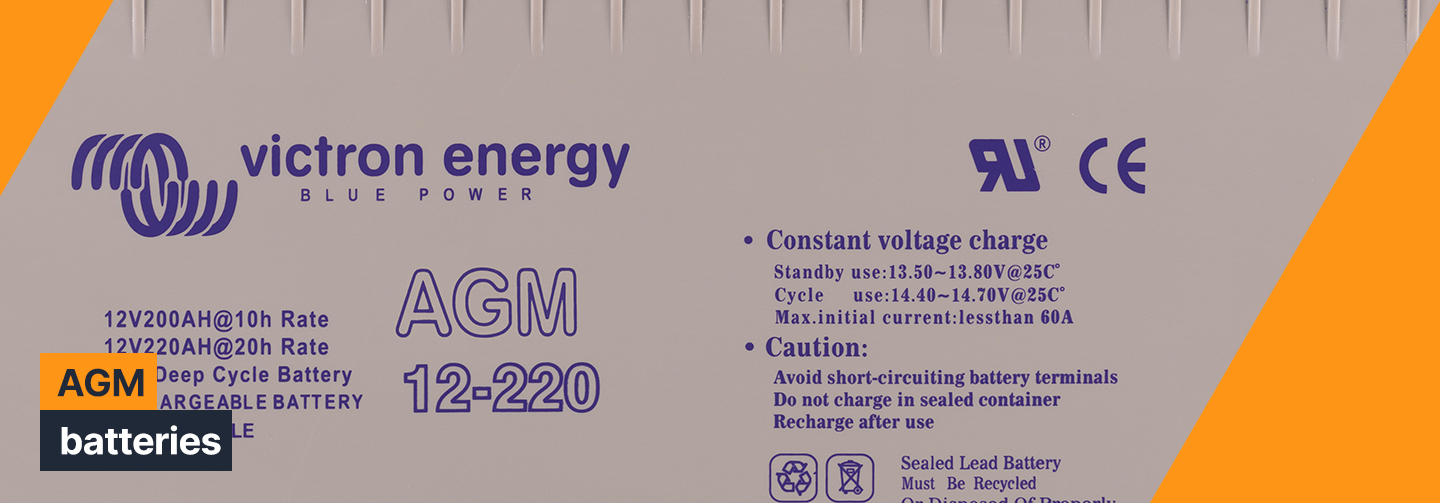
The design of a AGM battery is the same as the liquid electrolyte except that the acid is trapped between the lead plates in absorbing glass mats. This type of battery is perfect for cyclical operation. It can be regularly discharged and recharged without fear of overuse or damage to the battery. These batteries have a dedicated number of full cycles, usually 400 full 100% charges and discharges. With half that number of cycles, that number will increase to 800 cycles. Note at this point, sellers dishonestly advertise that their batteries they can withstand, for example, 2000 cycles with a 10% discharge. This is misleading and you should read the descriptions carefully.
The most important property of an AGM battery is that it can be used, for example, by electric vehicles or other devices that require relatively high currents for a specific period (e.g., a voltage converter). Unlike gel batteries, AGM batteries can withstand a discharge time of less than 5 hours. In addition, their design withstands much greater pressure in the cells, which makes the battery less susceptible to gassing, which results in an increase in current efficiency. We use AGM batteries for devices with a high constant load.
Gel batteries.
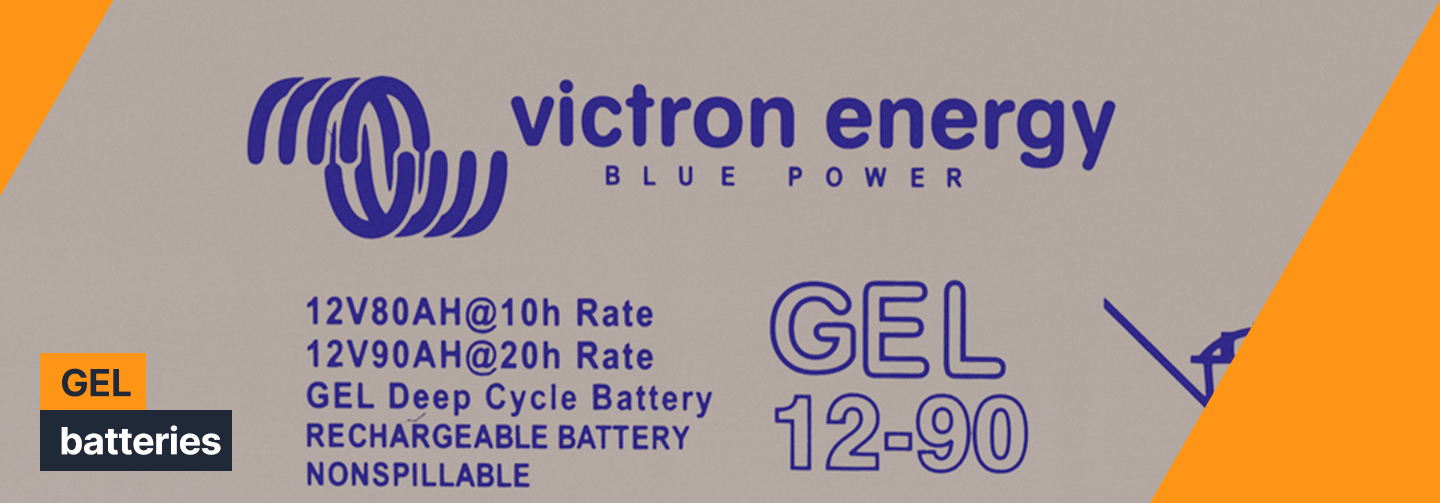
This word is overused by many sellers. Colloquially, all hermetic batteries, regardless of whether they have a liquid electrolyte or AGM structure, are incorrectly called gel batteries. It is a marketing ploy that misleads the potential buyer. The gel battery is just a liquid electrolyte concentrated with silica. This design provides the best operating parameters with slow discharge no faster than 5 hours. In a situation where the discharge time is greater than 20 hours, the battery can discharge more ampere-hours than indicated, even up to 20%. This performance characteristic works best in photovoltaic power systems where charging and discharging times are much longer than in cars or electric motors.
It is also worth noting that gel batteries best withstand deep discharges and the waiting time between discharging and charging. Like AGM batteries, they are designed for 400 cycles with 100% full discharge. It is also worth mentioning that such structures are best charged with a 10-hour current, and certainly not exceeding a charging time of 5 hours.
Common problems in a photovoltaic system.
Finally, it is worth noting that if we buy a solar system with a battery scheduled for a charging time of 5 to 7 hours from full discharge to charge, after only 2 to 3 years the battery capacity will be reduced as a result of natural use. This means that the charging time is dangerously shortened and may lead to the battery swelling or even its bursting. It is safest to match the solar panel with a new battery so that the charging time in the full sun is about 10 hours.
Powiązane produkty
12V/110Ah AGM Deep Cycle Batt. (M8)
Wytrzymały akumulator AGM 12V 110Ah Deep Cycle ze złączami M8. Przeznaczony do systemów fotowoltaicznych, UPS i łodzi. Gwarantuje niskie samorozładowanie, wysoką niezawodność i długą żywotność przy pracy cyklicznej.
12V/110Ah Gel Deep Cycle Batt.
Akumulator żelowy Victron Energy 12V 110Ah zapewnia długą żywotność i odporność na głębokie rozładowania. Doskonały do systemów solarnych, off-grid, kamperów i UPS. Gwarantuje stabilne zasilanie w każdych warunkach.
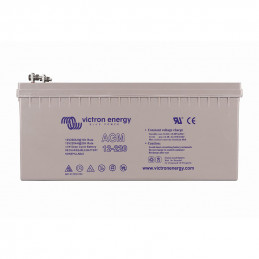
12V/220Ah AGM Deep Cycle Batt.
Akumulator AGM 12V 220Ah typu Deep Cycle, przeznaczony do systemów fotowoltaicznych, off-grid i UPS. Odporny na głębokie cykle rozładowania, zapewnia niezawodne źródło energii do dużych instalacji solarnych i magazynów energii.


Komentarze (0)